


Vision is one of the most important senses that helps us understand and interact with the world. From recognizing familiar faces and reading books to driving vehicles and enjoying beautiful scenery, our eyes play an essential role in everyday life. But have you ever wondered what is vision, how does it work, and what makes eyesight healthy?
Vision is more than simply seeing objects. It is a complex process in which your eyes collect light and send information to your brain, allowing you to recognize shapes, colors, movements, and distances.
Many people also want to know what the best vision possible is and whether 20/20 vision is considered perfect eyesight. Understanding these concepts can help you make better decisions about eye care and protect your vision as you age.
In this guide, we will explain what vision means, how the eyes work, different types of vision, common vision problems, and practical ways to maintain healthy eyesight.
What Is Vision?
Vision is the ability to see and interpret objects, people, colors, shapes, and movements using your eyes and brain. It allows you to understand your surroundings and perform everyday activities, such as reading, writing, walking, working, and driving.
Although your eyes are responsible for collecting visual information, your brain plays an equally important role in the process. Your eyes detect light and convert it into electrical signals, which travel through the optic nerve to the brain. The brain then processes these signals and creates the images you see.
For example, when you look at a tree, your eyes collect light reflected from its leaves, branches, and trunk. Your brain processes this information and helps you recognize the object as a tree.
Vision also involves several abilities, including:
- Visual acuity: The ability to see objects clearly at different distances.
- Color vision: The ability to recognize and distinguish different colors.
- Peripheral vision: The ability to see objects outside your direct line of sight.
- Depth perception: The ability to understand distances between objects.
- Contrast sensitivity: The ability to distinguish objects from their backgrounds.
- Eye coordination: The ability of both eyes to work together effectively.
All these functions contribute to your overall visual experience.
How Does Vision Work?
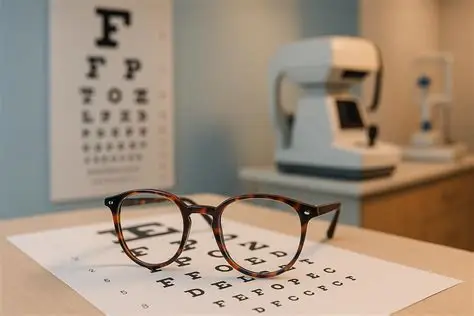
Vision involves several structures inside your eyes that work together to help you see clearly. The process begins when light enters your eyes and ends when your brain interprets the information.
Here is how the process works step by step.
1. Light Enters the Eye
When you look at an object, light reflected from that object enters your eye through the cornea. The cornea is the transparent front surface of the eye that helps bend and focus incoming light.
2. The Pupil Controls Light
After passing through the cornea, light travels through the pupil, which is the dark opening in the center of the eye.
The iris, the colored part of your eye, controls the size of the pupil. It becomes smaller in bright environments and larger in darker surroundings to regulate how much light enters.
3. The Lens Focuses Light
The light then passes through the natural lens, which adjusts its shape to help focus images onto the retina.
This focusing ability allows you to see objects clearly at different distances.
4. The Retina Detects Light
The retina is a light-sensitive layer located at the back of your eye. It contains specialized cells called photoreceptors.
There are two main types:
- Rods: Help you see in dim lighting and detect movement.
- Cones: Help you recognize colors and fine details, especially in bright light.
These cells convert light into electrical signals.
5. The Optic Nerve Sends Signals to the Brain
The electrical signals travel from the retina through the optic nerve to the brain.
The brain processes this information and allows you to recognize what you are looking at.
This entire process happens continuously, helping you understand the world around you.
What Are the Different Types of Vision?
Vision includes several different functions that allow people to interact with their surroundings. Each type plays an important role in daily activities.
The following table explains the main types of vision and their purposes.
| Type of Vision | Meaning | Everyday Example |
|---|---|---|
| Central Vision | Seeing objects directly in front of you | Reading a book |
| Peripheral Vision | Seeing objects outside your direct focus | Noticing someone walking beside you |
| Color Vision | Recognizing different colors | Identifying traffic lights |
| Depth Perception | Understanding distance and space | Parking a vehicle |
| Night Vision | Seeing in low-light environments | Walking in a dimly lit room |
| Binocular Vision | Using both eyes together | Catching a moving ball |
| Contrast Sensitivity | Identifying objects against backgrounds | Reading gray text on a white screen |
These visual abilities work together to provide a complete picture of your surroundings.
What Is the Best Vision Possible?
When discussing the best vision possible, many people immediately think of 20/20 vision. This measurement is commonly used to describe normal distance visual acuity.
However, some people naturally have sharper eyesight than 20/20.
Eye doctors use a Snellen eye chart to measure how clearly a person can see at a distance. The chart contains letters arranged in rows, with each row becoming progressively smaller.
A person with 20/20 vision can see at 20 feet what someone with standard visual acuity is expected to see at that distance.
Some individuals can achieve 20/15 or even 20/10 vision.
Here is what these measurements mean:
| Vision Measurement | Explanation |
|---|---|
| 20/10 | Exceptionally sharp distance vision |
| 20/15 | Better than standard 20/20 vision |
| 20/20 | Normal distance visual acuity |
| 20/30 | Slightly reduced visual acuity |
| 20/40 | Reduced distance vision |
| 20/60 | More noticeable difficulty seeing distant objects |
| 20/100 | Significantly reduced visual acuity |
| 20/200 | Severe visual impairment by common clinical criteria |
For example, someone with 20/15 vision can see details at 20 feet that a person with 20/20 vision would typically need to be 15 feet away to see.
It is important to remember that visual acuity is only one part of overall vision. A person can have 20/20 eyesight and still experience other eye health problems.
What Is Considered Normal Vision?
Normal vision generally refers to the ability to see clearly and comfortably at different distances without significant visual difficulties.
Although 20/20 vision is considered the standard measurement for normal distance eyesight, it does not describe every aspect of visual health.
Healthy vision also involves:
- Clear near and distance vision.
- Good peripheral awareness.
- Proper eye coordination.
- Healthy color recognition.
- Effective depth perception.
- Good contrast sensitivity.
- Healthy retinas and optic nerves.
For example, someone may have normal distance vision but struggle to read small text because of an age-related condition called presbyopia.
Similarly, a person with 20/20 vision may have reduced peripheral vision due to an underlying eye condition.
This is why comprehensive eye examinations are important even when you believe your eyesight is normal.
Common Vision Problems
Several conditions can affect how clearly you see. Some are related to the shape of your eyes, while others develop because of aging, diseases, or injuries.
Here are some common vision problems.
1. Nearsightedness (Myopia)
Nearsightedness is a refractive error that makes distant objects appear blurry while nearby objects remain relatively clear.
It commonly develops during childhood or adolescence but can also affect adults.
Prescription glasses, contact lenses, and certain medical procedures can help correct myopia.
2. Farsightedness (Hyperopia)
Farsightedness makes nearby objects harder to see clearly. Depending on its severity, it can also affect distance vision.
People with hyperopia may experience eye strain, headaches, or difficulty focusing on close objects.
3. Astigmatism
Astigmatism occurs when the cornea or lens has an irregular shape. This causes light to focus unevenly, resulting in blurred or distorted vision.
Common symptoms include difficulty seeing fine details, headaches, and eye strain.
4. Presbyopia
Presbyopia is an age-related condition that makes it harder to focus on nearby objects.
It commonly becomes noticeable around age 40 as the natural lens gradually loses flexibility.
Reading glasses, multifocal lenses, and other corrective options can help manage this condition.
5. Cataracts
Cataracts develop when the natural lens inside the eye becomes cloudy.
They can cause blurry vision, glare, faded colors, and difficulty seeing at night. Treatment may involve cataract surgery when vision becomes significantly affected.
What Factors Affect Your Vision?
Your eyesight can be influenced by several factors throughout your life. Understanding these factors can help you protect your eyes and recognize potential risks.
Genetics: Your family history can influence your likelihood of developing refractive errors and certain eye diseases.
Age: Natural changes in the eye can affect focusing ability and visual clarity as you get older.
Nutrition: Essential nutrients, including vitamins A, C, and E, zinc, lutein, and zeaxanthin, support normal eye health.
Digital Screen Use: Spending long periods looking at screens can contribute to dry eyes, headaches, and temporary blurred vision.
Medical Conditions: Diabetes and high blood pressure can increase the risk of certain eye complications.
UV Exposure: Excessive exposure to ultraviolet radiation can contribute to long-term eye damage.
How Can You Maintain Healthy Vision?
Although you cannot guarantee perfect eyesight, developing healthy habits can help protect your eyes and support good vision.
Follow the 20-20-20 Rule
If you spend several hours working on computers or smartphones, follow the 20-20-20 rule.
Every 20 minutes, look at something approximately 20 feet away for at least 20 seconds.
This habit encourages regular breaks and may help reduce digital eye strain.
Eat Foods That Support Eye Health
A balanced diet provides nutrients that support normal eye function.
Consider including these foods in your meals:
- Spinach and kale for lutein and zeaxanthin.
- Carrots and sweet potatoes for beta-carotene.
- Salmon and sardines for omega-3 fatty acids.
- Eggs for several nutrients that support eye health.
- Oranges and berries for vitamin C.
Remember that healthy foods support eye health but cannot guarantee perfect vision or reverse refractive errors.
Wear Protective Eyewear
Sunglasses with 100% UVA and UVB protection help protect your eyes from harmful ultraviolet radiation.
If you work in construction, manufacturing, welding, or other environments with potential eye hazards, wear appropriate protective safety glasses.
Get Regular Eye Examinations
Routine eye examinations allow eye care professionals to evaluate your eyesight and identify potential problems.
An eye examination may include visual acuity testing, eye pressure measurement, and an assessment of the retina and other eye structures.
The recommended frequency depends on your age, health, and individual risk factors.
Get Enough Sleep
Adequate sleep supports overall health and helps reduce eye discomfort associated with fatigue.
Poor sleep may contribute to dry eyes, irritation, redness, and difficulty focusing.
Avoid Smoking
Smoking increases the risk of serious eye conditions, including cataracts and age-related macular degeneration.
Avoiding tobacco is an important step toward maintaining long-term eye health.
When Should You Visit an Eye Doctor?
You should schedule an eye examination if you experience persistent blurred vision, frequent headaches, difficulty focusing, or changes in your eyesight.
Some symptoms require immediate medical attention, including:
- Sudden loss of vision.
- Severe eye pain.
- New flashes of light or a sudden increase in floaters.
- A dark curtain or shadow across your vision.
- Sudden double vision.
- Sudden changes in peripheral vision.
These symptoms can indicate serious eye conditions that need prompt evaluation.
Regular eye examinations are also important because some eye diseases develop without noticeable symptoms during their early stages.
Frequently Asked Questions (FAQs)
1. What is vision in simple words?
Vision is the ability to see and understand the world using your eyes and brain. It allows you to recognize objects, colors, faces, shapes, and movements.
2. How does human vision work?
Human vision works when light enters the eyes, passes through the cornea and lens, and reaches the retina. The retina converts light into electrical signals that travel through the optic nerve to the brain, where visual information is processed.
3. What is the best vision possible?
The best vision possible can be sharper than 20/20. Some people naturally achieve 20/15 or 20/10 visual acuity, which allows them to see finer details at a distance.
4. Is 20/20 vision perfect eyesight?
20/20 vision is considered normal distance visual acuity, but it does not guarantee perfect overall eyesight. Other visual functions, such as peripheral vision, depth perception, and contrast sensitivity, also matter.
5. Can vision improve naturally?
Healthy habits, proper nutrition, adequate sleep, and regular eye examinations can support eye health. However, natural methods cannot reliably correct refractive errors such as nearsightedness or astigmatism.
6. What are the main types of vision?
The main types include central vision, peripheral vision, color vision, depth perception, night vision, binocular vision, and contrast sensitivity.
7. Why is vision important in everyday life?
Vision helps people perform everyday activities, including reading, driving, working, recognizing faces, navigating their surroundings, and understanding visual information.
8. How often should I get my eyes checked?
The frequency depends on your age, medical history, risk factors, and existing eye conditions. An eye care professional can recommend an appropriate examination schedule.
Conclusion
Understanding what is vision helps us appreciate how our eyes and brain work together to make everyday activities possible. Vision is not limited to seeing objects clearly; it also involves color recognition, depth perception, peripheral awareness, and the ability to interpret visual information.
Although 20/20 vision is considered the standard for normal distance visual acuity, the best vision possible may be sharper, such as 20/15 or 20/10.
Maintaining healthy eyesight requires consistent care, including a balanced diet, appropriate protective eyewear, regular breaks from digital screens, adequate sleep, and routine eye examinations.
Taking care of your eyes today can help protect your vision and support your overall quality of life for years to come.